From Overwhelmed to in Control: How Tracking Time with a Friend Saved What Matters Most
We’ve all been there—juggling work, life, and dreams, only to realize we’re losing time on what truly matters. I felt it too, until I started sharing a simple time-tracking app with a close friend. It wasn’t about productivity for its own sake, but about protecting the moments we cherish. What began as a small experiment became a lifeline, helping us guard our priorities, stay accountable, and show up more fully—for ourselves and each other. That quiet realization—that we were living on autopilot—was the spark. And it didn’t take a major life crisis to wake us up, just one honest conversation over coffee and a shared desire to stop drifting.
The Slow Drift: When Daily Hustle Starts Costing You Your Life
Remember how, when you were younger, you imagined your adult life? Maybe you saw yourself reading bedtime stories with presence, finally starting that blog, or calling your mom every Sunday. Now, think about last week. Did you actually do those things—or did they get buried under a mountain of 'urgent' tasks that somehow never seemed to end?
This isn’t about laziness. It’s about how easily our days get hijacked. I used to believe I was managing just fine—until I missed my niece’s birthday call because I was deep in a work email chain that could’ve waited. That moment stung. Not because of the email, but because I realized I’d been choosing noise over meaning, again and again, without even noticing.
It wasn’t one big failure. It was a thousand small ones. Skipping my morning walk because I hit snooze three times. Promising myself I’d journal after dinner, only to scroll through my phone until midnight. Saying yes to every request at work while my own goals gathered dust. The problem wasn’t time—it was awareness. I didn’t know where my hours were going, so I couldn’t protect the things I said I cared about.
And I know I’m not alone. So many women I talk to—mothers, professionals, creatives, caregivers—feel the same quiet ache. They love their lives, but they’re living them in fragments. They want to be present, but they’re distracted. They want to grow, but they’re stuck. The hustle becomes a habit, and before we know it, years have passed in a blur of to-do lists and unfinished intentions.
What I’ve learned is that this drift isn’t inevitable. It’s not a character flaw. It’s a design flaw in how we manage our days. And sometimes, all it takes is one small shift—like noticing—to begin reclaiming what matters.
A Simple Idea Born from Frustration: Two Friends, One App
That shift started with a text from my friend Sarah: 'Do you ever feel like you’re doing everything except what you actually want to do?' I replied instantly: 'Every. Single. Day.' We met for coffee the next week, both exhausted, both carrying that familiar weight of unmet promises—to ourselves.
Sarah had been meaning to learn watercolor for three years. I’d wanted to write more, reconnect with old friends, even just cook a proper Sunday dinner. But our days were filled with 'productive' things—answering emails, organizing the pantry, attending meetings—that somehow never led to real fulfillment. We weren’t lazy. We were just misdirected.
That’s when Sarah mentioned a time-tracking app she’d tried briefly. Not for work. Not for billing hours. But to see where her personal time was really going. 'I thought I was spending an hour a day on my art,' she said, laughing. 'Turns out I was spending 47 minutes scrolling and 13 minutes actually painting.'
We both laughed, but it wasn’t funny. It was revealing. What if we tried it—together? Not to compete, not to shame each other, but to finally see the truth. We’d use the same app, compare notes weekly, and hold space for each other. No pressure. Just honesty.
The app we chose was simple—no complex dashboards, no corporate jargon. Just a way to log how we spent our time, with categories we created ourselves: 'Family Time,' 'Creative Work,' 'Mindless Scrolling,' 'Deep Focus,' 'Chores,' 'Self-Care.' We didn’t care about fancy reports. We cared about clarity.
What surprised me was how much safer it felt to do this with someone. Tracking alone felt like self-surveillance. But with Sarah, it became a shared mission. We weren’t just collecting data—we were building a bridge back to ourselves. And the app? It wasn’t the hero. It was just the tool that helped us start the conversation.
Seeing the Truth: What the Data Revealed About Our Lives
The first week of tracking was… humbling. I looked at my report and felt a mix of shock and sadness. I’d logged 11 hours of 'work,' but only 2 of those were actual focused tasks. The rest? Meetings that could’ve been emails, distractions, multitasking that got nothing done well. I thought I was being productive. I was just busy.
And the biggest shocker? My phone. I labeled one category 'Quick Check'—you know, just glancing at messages, news, social media 'for a minute.' The app showed I’d done that 28 times in one day. Total time: 90 minutes. Ninety minutes lost to 'quick' checks. That’s an hour and a half I could’ve used to call my sister, start dinner early, or just sit quietly with a cup of tea.
Sarah’s data told a similar story. She wanted to spend more time with her daughter after school, but her logs showed she was often on her laptop, 'just finishing one thing,' while her daughter played alone. She wasn’t ignoring her—she was distracted, caught in the loop of 'just one more email.'
But here’s what I didn’t expect: the data didn’t make us feel guilty. It made us feel seen. For years, we’d been blaming ourselves—'I’m so undisciplined,' 'I’ll never get it together'—but the numbers showed something different. It wasn’t a lack of willpower. It was a lack of awareness. We weren’t failing. We were just blind to our own patterns.
The app didn’t judge. It just showed. And in that showing, there was kindness. Because once you see the truth, you can make different choices. You don’t have to keep living the same way. You can design your days instead of drifting through them. That realization was freeing. It wasn’t about fixing ourselves. It was about understanding ourselves.
From Awareness to Action: Building Habits That Protect What’s Important
Knowing where our time went was powerful, but it wasn’t enough. We needed to act. So we started small. Sarah decided to protect the first 30 minutes after she got home. No phone, no laptop. Just her and her daughter—talking, playing, being present. She labeled that time 'Reconnect' in the app, and seeing it blocked out made it feel non-negotiable.
I did something similar. I love writing, but I kept putting it off until 'I had time.' The data showed I had 45 minutes every morning—after I dropped the kids but before my work calls started. But I was spending it checking news and social media. So I swapped it. Now, that time is 'Morning Pages'—just me, my journal, and my thoughts. No editing, no pressure. Just writing.
We also learned to label our time meaningfully. Instead of 'Work,' we broke it down: 'Creative Work,' 'Admin Tasks,' 'Meetings.' That way, we could see if we were spending too much time on low-value tasks. And when we were, we could adjust. I realized I was spending hours on emails that didn’t move my goals forward. So I set a rule: 30 minutes, twice a day. No more.
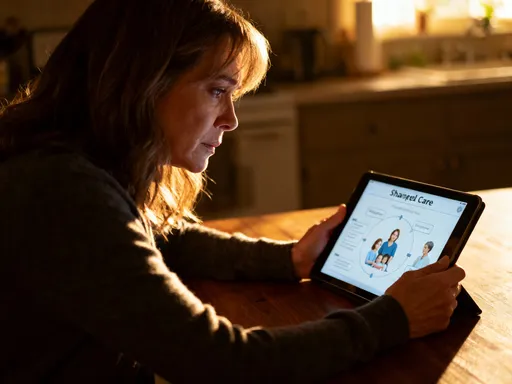
Another game-changer? The weekly review. Every Sunday evening, Sarah and I would video call and share our time logs. Not to compare, but to reflect. 'How did your week feel?' 'Where did your energy go?' 'What would you like to protect next week?' Those conversations became sacred. They weren’t about perfection—they were about intention.
We also learned to forgive ourselves. Some weeks, the data looked messy. We’d fall back into old habits. But instead of giving up, we’d say, 'Okay, what happened?' Maybe I was tired. Maybe something came up. The point wasn’t to track perfectly. It was to care enough to notice.
Friendship as Accountability: How Shared Tracking Deepened Our Bond
The most unexpected gift of this experiment wasn’t better time management. It was deeper friendship. Our weekly check-ins became more than data sharing—they became heart-to-heart moments. We started talking about things we’d never shared before: our fears of falling behind, our guilt about not doing enough, our quiet dreams we were afraid to name.
One week, Sarah said, 'I feel like I’m failing as a mom because I’m always tired.' I admitted, 'I’m scared I’ll look back and realize I never really wrote that book I always talked about.' In that moment, we weren’t just friends checking in. We were allies. The app gave us a reason to talk, but the connection came from our honesty.
And here’s the thing—there was no competition. We weren’t trying to 'win' at time tracking. We were rooting for each other. When I finally spent two hours writing one Saturday morning, Sarah celebrated like it was her own win. When she had a week with zero mindless scrolling, I sent her a silly GIF that said 'Queen of Focus.'
That support made all the difference. Accountability often feels harsh—like someone watching over your shoulder. But this felt gentle. It was accountability with love. We weren’t policing each other. We were witnessing each other. And in that witnessing, we felt less alone.
I’ve realized that so many of us try to 'fix' ourselves in isolation. We download apps, set goals, make plans—all alone. But change is easier when we’re not carrying it by ourselves. Having someone who sees your struggle and says, 'Me too,' makes the journey lighter. And when that someone is a friend who truly cares? That’s magic.
Protecting the Unmeasurable: Making Space for Joy, Growth, and Presence
After six months, something shifted. It wasn’t that we were 'done'—we weren’t perfect. But we were more present. More intentional. More at peace.
Sarah started a small watercolor Instagram page. Not for fame. Not for money. Just because she loves it. And she does it consistently now—every Sunday morning, rain or shine. That time is sacred. She blocks it, protects it, and shows up for it. And her joy is contagious.
I finished my first essay in years. Not because I had more time, but because I stopped pretending I’d 'find' time. I made it. I guarded it. And when I read it aloud to Sarah during one of our calls, she cried. Not because it was flawless, but because I had finally shown up for myself.
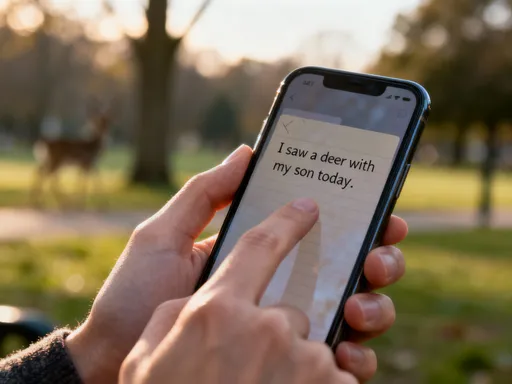
But the biggest changes weren’t in our accomplishments. They were in the quiet moments. The ability to sit with my son and really listen to his story about the snail he found. The freedom to say no to a meeting that didn’t matter so I could attend my daughter’s choir concert. The peace of knowing I wasn’t just reacting to life—I was choosing it.
The app didn’t create these moments. But it helped us protect them. It gave us the awareness to say no to the urgent so we could say yes to the important. And over time, that added up to a life that felt more like ours.
That’s the truth I’ve come to believe: the most valuable things in life can’t be measured. Love. Presence. Joy. Growth. But the time we give them? That can be protected. And sometimes, a little tech can help us do that—kindly, gently, with support.
A Practice, Not a Fix: How We Keep It Going Without Burnout
Here’s what I’ll tell you—this isn’t a one-time fix. It’s a practice. Some weeks, we forget to track. Some weeks, we’re too busy or too tired. And that’s okay. We don’t beat ourselves up. We just start again.
We’ve learned to keep it simple. We don’t track every single minute. Just enough to stay aware. We focus on key categories—family, creativity, self-care, rest. If we’re spending less than two hours a week on things that matter to us, we know it’s time to adjust.
We also celebrate small wins. Did I cook a real dinner three nights this week? Win. Did Sarah spend an hour painting without checking her phone? Win. These aren’t grand achievements, but they’re steps toward a life we love.
And we’ve learned to adapt. When I started a new project at work, I adjusted my tracking to include 'Project Focus' time. When Sarah’s daughter started school, we added 'Transition Time' to help her ease into the new routine. The system serves us—not the other way around.
The goal was never control. It was care. Care for our time, our energy, our relationships, our dreams. And by sharing this journey, we’ve built something rare: a friendship that helps us both become who we want to be.
So if you’re feeling overwhelmed, if you’re tired of drifting, if you want to live more intentionally—start small. Pick one thing you care about. Track it for a week. Share it with someone you trust. You don’t need a perfect system. You just need a little awareness, a little courage, and a little support.
Because your time is your life. And you deserve to spend it on what truly matters.